OEM Manufacturing • ODM Development • Bulk Supply — Serving 50+ Countries Worldwide

OEM Manufacturing • ODM Development • Bulk Supply — Serving 50+ Countries Worldwide
Admin
18/07/2026
1
Finding the right OEM camera manufacturer is one of the most important decisions a digital camera brand, distributor or importer can make. The manufacturer you select will influence product quality, pricing, delivery schedules, customer satisfaction and the long-term reputation of your brand.
China remains a major sourcing destination for digital cameras because buyers can access established manufacturing networks, product development capabilities, flexible customization and a wide range of camera categories. However, not every supplier offers the same level of technical expertise, production control or business support.
A reliable private label digital camera manufacturer should do more than place your logo on an existing product. The company should understand your target market, recommend appropriate specifications, control production quality and help you create a product that can compete in your chosen sales channel.
This guide explains how to evaluate an OEM or private-label camera partner before placing a sample order or committing to bulk production.
An Original Equipment Manufacturer, or OEM, produces cameras that another company can sell under its own brand.
Depending on the project, an OEM arrangement may include:
A business may choose an existing camera model, request specific modifications and launch the finished product under its own brand.
This approach is useful for retailers, ecommerce businesses, distributors and consumer-electronics brands that want to enter the camera market without building their own production facility.
Although these terms are often used together, they do not always describe the same service.
With OEM manufacturing, the buyer normally selects an available product platform and requests branding or specification changes. It is often the fastest route to launching a branded camera.
An ODM camera manufacturer provides a deeper level of product development. The manufacturer may help design the camera, develop its structure, select components and prepare it for production.
ODM projects usually require more development time, technical communication and investment than basic logo customization.
Private labeling generally involves selecting a ready-made camera and selling it under the buyer’s own brand. The product may receive a custom logo, retail box, manual and accessories while its main technical design remains unchanged.
Businesses that need a faster launch and lower development risk may begin with private labeling before moving into a more customized OEM or ODM project.
The lowest quotation does not always produce the lowest total cost.
A poorly selected supplier can create problems such as:
These problems can damage customer trust and reduce profit even when the original unit price appears attractive.
The right digital camera manufacturer should help reduce these risks through clear documentation, structured sampling, quality-control procedures and reliable communication.
Before contacting manufacturers, create a clear product brief.
Your brief should explain:
For example, a camera designed for beginner vloggers will require different features from a waterproof camera intended for outdoor retailers.
The clearer your requirements are, the easier it will be for the manufacturer to recommend a suitable model and provide an accurate quotation.
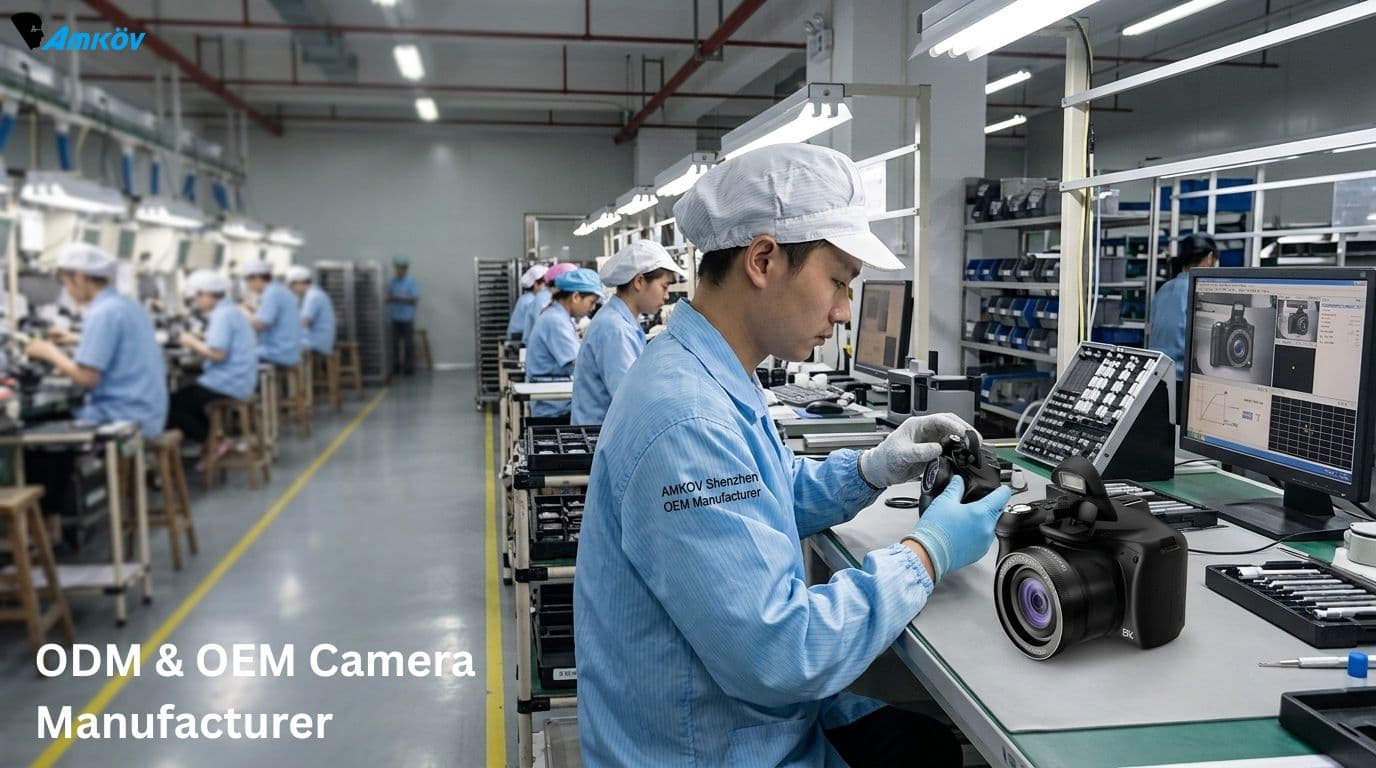
Some suppliers list cameras alongside hundreds of unrelated electronic products. This may indicate that they are trading companies rather than specialized manufacturers.
A dedicated camera manufacturer in China should demonstrate experience with camera-related product development, components, firmware, imaging performance and production testing.
Review the manufacturer’s main product categories. Look for experience in the types of products you plan to sell, such as:
Specialization matters because camera manufacturing involves more than assembling a housing and sensor. Image processing, focus performance, color output, battery management, display quality and firmware stability can all affect the user experience.
Ask whether the supplier owns or directly manages the manufacturing process.
Useful questions include:
A legitimate factory should be able to explain its production process clearly.
However, factory ownership alone does not guarantee quality. Evaluate the company’s technical knowledge, communication, documentation and quality controls at the same time.
A strong product portfolio can show whether the supplier understands different camera markets.
Brands targeting content creators may need flip screens, Wi-Fi connectivity, external microphone support, remote controls, lighting features or multiple-lens configurations.
Businesses researching vlogging camera wholesale opportunities should confirm whether advertised features work consistently in real-world use.
A reliable waterproof camera manufacturer should clearly state the tested depth, waterproof structure and usage limitations.
Do not rely only on promotional images. Request test information and confirm whether waterproof performance applies to the camera body or an external waterproof case.
Businesses entering the kids camera wholesale market should evaluate button size, casing strength, display quality, menu simplicity, battery safety and age-appropriate design.
Creative frames and filters can add value, but durability and ease of use should remain important selection criteria.
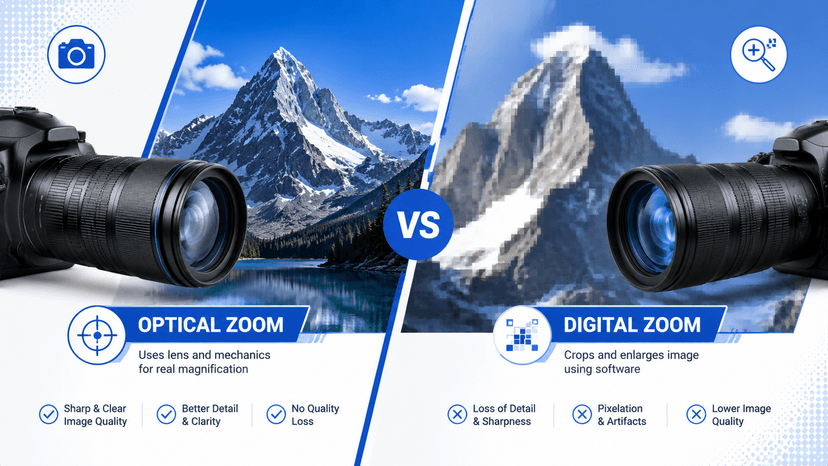
Buyers should understand the difference between optical and digital zoom.
Optical zoom changes the focal length through the lens system, while digital zoom enlarges part of the image electronically. Product descriptions should identify these features accurately to prevent misleading marketing.
Camera listings can contain impressive numbers, but buyers should verify how those numbers are achieved.
Ask the potential digital camera supplier to provide a complete specification sheet covering:
Pay close attention to native and interpolated resolution. A camera may generate a large output file through software interpolation even when the physical sensor has a lower native resolution.
The supplier should explain this difference accurately.
Never approve an important order based only on a catalog, quotation or edited marketing video.
Request samples and evaluate them as a real customer would.
Test:
When comparing wholesale digital cameras, use the same testing process for every shortlisted model. This makes it easier to identify genuine differences instead of relying on promotional claims.
Keep an approved reference sample. The manufacturer should use that sample as the expected standard for mass production.
Ask the manufacturer to explain what happens before, during and after production.
A structured quality-control process may include:
For waterproof models, request information about leak or pressure testing where applicable.
For large orders of bulk digital cameras, discuss whether pre-shipment inspection can be conducted by your team or an independent inspection company.
The inspection standard, acceptable defect level and corrective process should be agreed upon before production begins.
Certification requirements can vary by product configuration and destination.
Before ordering, identify which documentation is needed for markets such as the United States, Canada, the United Kingdom, European Union countries, Australia or the United Arab Emirates.
Depending on the product and market, buyers may need to discuss:
Do not assume that one certificate covers every model or configuration.
Ask for documentation connected to the exact camera, battery, charger and wireless features you plan to purchase. Consider having the documents reviewed by a qualified compliance professional or laboratory before shipment.
Not every manufacturer offers the same level of customization.
Basic private-label options may include:
More advanced OEM or ODM services may include:
Ask the custom camera manufacturer to separate standard branding options from engineering changes.
This distinction matters because engineering work usually affects development fees, testing requirements, MOQ and lead time.
Minimum order quantity can vary according to the camera model and level of customization.
A standard model with a basic logo may have a lower MOQ than a camera requiring a custom housing, firmware or packaging structure.
When comparing quotations, examine more than the unit price.
Your total cost may include:
A low product price can become expensive when the quotation excludes essential services.
Request a clear breakdown of what is included, what is optional and which costs may change after sample approval.
Ask how long each stage of the project will take.
A typical project may involve:
Lead time may change during busy production periods or when custom components are required.
Confirm whether the manufacturer can support repeat orders if demand grows. A supplier suitable for a small test order may not always be prepared for larger seasonal orders.
Retail packaging plays an important role in private-label success.
Confirm whether the manufacturer can provide:
Do not automatically use generic supplier copy. Review every specification and rewrite the product content for your own target customer.
Accurate descriptions can reduce confusion, customer complaints and product returns.
A reliable private label digital camera manufacturer should explain how defective products and technical problems are managed.
Ask:
These terms should be documented before placing a bulk order.
After-sales support is especially important when the cameras will be sold through retailers or ecommerce platforms where customer reviews can directly affect future sales.
If the project includes a custom design, firmware, mold or packaging concept, discuss confidentiality and ownership before sharing sensitive information.
Important subjects may include:
Legal protections can vary by country. Obtain professional legal advice when the project involves significant development costs or proprietary designs.
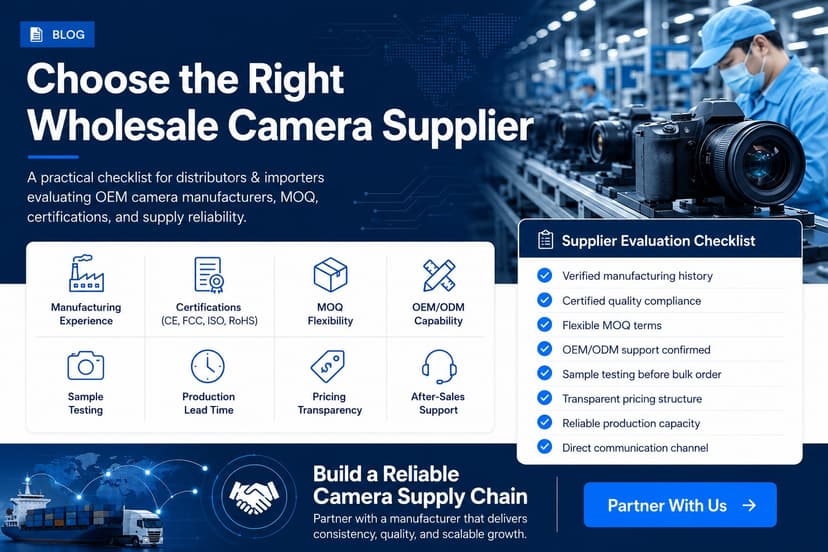
Use the following checklist during supplier discussions:
The answers should be specific. Vague responses may indicate that the supplier has limited control over the product or production process.
Be cautious when a supplier:
One red flag may have a reasonable explanation. Several red flags together should be treated as a serious warning.
Amkov presents itself as a China-based camera manufacturing company offering OEM manufacturing, ODM development and bulk supply. Its published product categories include optical zoom, digital zoom, V-Log, video, waterproof, instant-print and kids’ cameras.
The company states that its OEM services include custom design and branding, supported by in-house R&D, mold development, injection molding and production quality control. Its ODM service covers product design, development and manufacturing for buyers seeking a more customized solution.
Amkov also promotes private-label and wholesale opportunities for product categories such as 5K V-Log cameras and waterproof cameras. These options may be relevant to distributors, retailers and brands seeking an established OEM camera manufacturer rather than developing a camera platform entirely from the beginning.
Buyers should still complete their own sample testing, compliance review and commercial due diligence before confirming any production order.
Choosing an OEM camera manufacturer should not be based on price alone.
The strongest manufacturing partner is one that understands your market, communicates clearly, provides accurate specifications and follows a controlled product-development and production process.
Start with a detailed product brief. Compare several suppliers, order samples, test the cameras carefully and document every approved requirement before production.
Whether you need wholesale digital cameras, a private-label vlog camera, a waterproof model or a kids’ camera range, the same rule applies: choose a manufacturer that can protect product quality while supporting the long-term growth of your brand.
A well-planned supplier relationship can help you launch faster, reduce avoidable risks and build a camera product line that customers trust.
An OEM camera manufacturer produces or customizes cameras that another company sells under its own brand. Services may include logo printing, packaging, manuals, accessories, firmware changes and product modifications.
Private-label production normally uses an existing camera with customized branding and packaging. OEM manufacturing may include more extensive changes to specifications, appearance, accessories or firmware.
Review the manufacturer’s specialization, factory capabilities, product range, sample quality, specifications, certifications, quality-control procedures, warranty policy and references. Always test samples before placing a bulk order.
MOQ depends on the product, materials and level of customization. Basic logo customization may require a smaller order than custom housing, firmware or mold development. Request model-specific MOQ information from the manufacturer.
Many manufacturers offer logo printing, custom retail boxes, manuals, labels and startup screens. Advanced structural or firmware customization may require a larger MOQ and development fees.
Yes. Samples allow you to check image quality, video performance, battery behavior, menu operation, accessories and packaging before approving mass production.
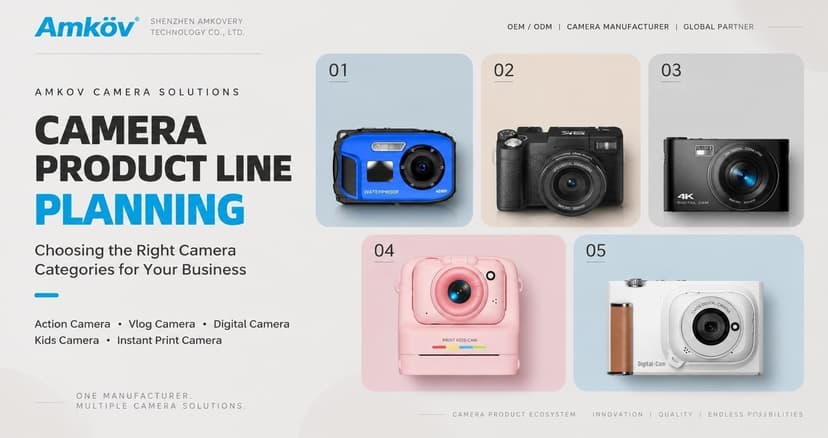
Common categories include vlog cameras, digital zoom cameras, optical zoom cameras, waterproof cameras, instant-print cameras, kids’ cameras and video cameras.
Request a complete specification sheet and test the product. Confirm native sensor resolution, output resolution, frame rate, zoom type, focus system, battery capacity and wireless functions instead of relying only on the marketing title.
The quotation should identify the camera model, specifications, unit price, MOQ, customization, packaging, accessories, sample fees, tooling costs, payment terms, production lead time, warranty and shipping terms.
After-sales support helps a buyer manage defective products, firmware problems, spare parts and customer claims. A clear support process can protect the brand’s reputation after the cameras reach the market.
11/10/2026
19/09/2026
05/09/2026
23/08/2026
10/08/2026
18/07/2026
01/07/2026
20/06/2026
06/06/2026
14/05/2026