OEM Manufacturing • ODM Development • Bulk Supply — Serving 50+ Countries Worldwide

OEM Manufacturing • ODM Development • Bulk Supply — Serving 50+ Countries Worldwide
Admin
21/04/2026
5
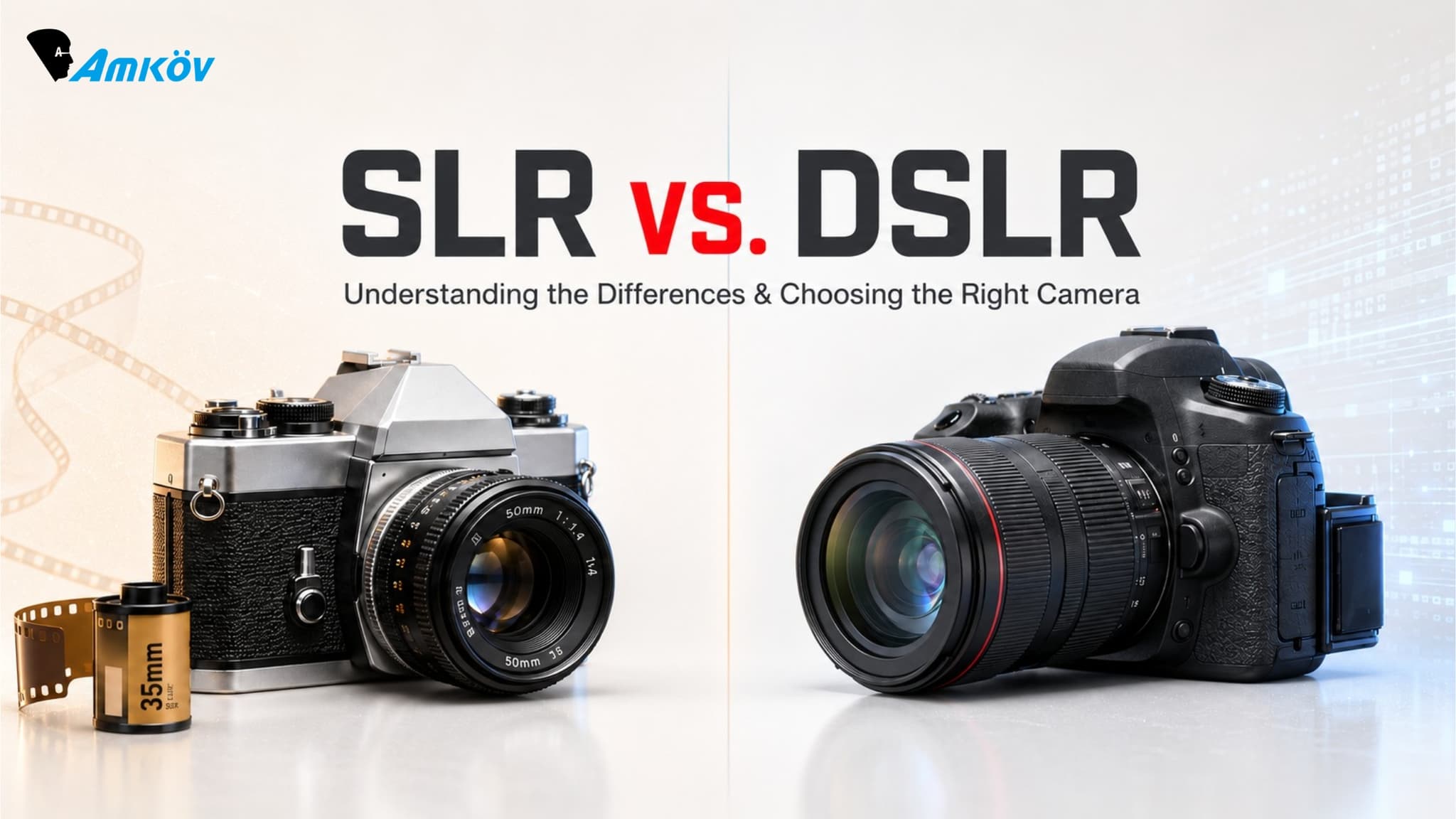
SLR and DSLR cameras use a single-lens reflex system. Light enters through the lens and reflects from a mirror into an optical viewfinder. The main SLR DSLR camera difference is the recording medium: a traditional SLR captures images on film, while a DSLR uses a digital sensor and stores files on a memory card. A DSLR is usually more practical if you want instant previews, easy editing, and a lower cost per photo. An SLR suits photographers who value the look and hands-on process of film. Your ideal camera depends on whether you shoot portraits, travel, products, video, or professional assignments. This Camera Buying Guide compares SLR, DSLR, mirrorless, and compact cameras.
SLR stands for Single-Lens Reflex. Light enters through the camera lens and reflects from an internal mirror toward a prism or focusing screen, allowing the photographer to view the scene through an optical viewfinder. When the shutter button is pressed, the mirror moves upward and light reaches the film to create the photograph.
Technically, a DSLR is also a type of SLR. In everyday comparisons, however, “SLR camera” usually means a film model, while “DSLR” means its digital counterpart. SLR photographs cannot be reviewed until the film is developed or scanned.
DSLR stands for Digital Single-Lens Reflex. It uses a mirror and optical viewfinder system similar to an SLR, but a digital image sensor replaces the film. Photographs are stored as JPEG or RAW files on a memory card and can be reviewed immediately on the camera’s LCD screen.
A simple DSLR camera definition is a digital camera with an image sensor, reflex mirror, optical viewfinder, and interchangeable lenses. Fast autofocus, adjustable ISO, and easy editing have made the DSLR camera an influential type of Digital Camera.
In both systems, light passes through the lens and reaches the viewfinder through a mirror mechanism. When you press the shutter, the mirror moves away so the light can reach the recording surface. This is where the DSLR and SLR difference becomes clear:
The DSLR is the digital form of the SLR design. Both systems may offer interchangeable Camera Lenses, manual exposure, and through-the-lens composition.
The main difference between SLR and DSLR cameras lies in how they capture and store images. An SLR camera uses photographic film and stores images on a film roll, whereas a DSLR uses a digital image sensor and saves images on a memory card. With an SLR, photos can only be viewed after the film has been developed or scanned, while a DSLR allows users to review images immediately after capturing them. Changing the ISO on an SLR usually requires changing the film, but a DSLR allows the ISO to be adjusted easily between shots. The cost per photo is higher with an SLR because of film and processing expenses, while it is relatively low with a DSLR after the initial purchase. SLR photos must be scanned before they can be edited or shared digitally, whereas DSLR photos can be edited and shared directly. Traditional film SLRs do not support video recording, but most DSLR models do. In terms of learning, an SLR offers a slower and more deliberate experience, while a DSLR provides immediate feedback that helps users learn faster. Although the size and weight of both cameras vary by model, DSLRs are often heavier because of their mirror and prism systems.
Camera type alone does not determine image quality. Lens quality, sensor size or film stock, lighting, exposure, and skill all influence the result. Film offers distinctive grain and color, while DSLR RAW files, flexible ISO, and fast autofocus are convenient for events, wildlife, products, and high-volume work. Either system can produce excellent photographs.
An SLR’s film look and tactile process can encourage careful composition, exposure, and use of Manual Focus Lenses. However, film, developing, and scanning create ongoing costs, while mistakes cannot be reviewed immediately. When buying used, inspect the light seals, shutter, meter, film chamber, and lens.
A DSLR camera lets you review images immediately, change ISO, and edit RAW or JPEG files easily. You can add portrait, macro, wide-angle, or telephoto lenses. However, its mirror and prism often make it larger and heavier than a mirrorless model. Check lens compatibility, repair support, and the upgrade path before buying.
A capable professional DSLR remains reliable for events, wildlife, studio, and sports, especially if you already own compatible lenses. When comparing pro DSLR cameras or DSLR cameras for professional photographers, consider autofocus, low-light performance, burst speed, dual card slots, weather sealing, and service. For a new system, compare current mirrorless alternatives and their autofocus and video features.
A DSLR uses a mirror and optical viewfinder; a mirrorless camera shows the sensor’s live image on an electronic viewfinder or screen. Mirrorless models are often smaller and offer modern autofocus and video features. DSLRs can provide better battery life, a clear optical view, and broad used-lens access. The mirrorless camera vs DSLR choice depends on priorities, existing equipment, and budget.
Not every user needs a large interchangeable-lens Professional Camera. For travel, family use, vlogging, or retail, compact digital cameras offer a simpler solution.
AMKOV supplies optical-zoom, V-Log, waterproof, instant-print, and kids’ cameras. It works with customers in more than 50 countries through OEM, ODM, private-label, and bulk-supply solutions. Buyers should confirm samples, certifications, MOQ, customization, lead times, and support before sourcing.
The central SLR vs DSLR question is whether you prefer film or a fast digital workflow. Choose an SLR for analog character and a slower hands-on process. Choose a DSLR for instant previews, flexible ISO, easy editing, and a low cost per additional photo.
If portability, video, and modern autofocus matter, extend the DSLR vs SLR camera comparison to mirrorless and compact models. The best camera fits your work, complete budget, and regular use.
Digital SLR cameras, or DSLRs, combine a reflex mirror, optical viewfinder, and digital sensor. They save photographs to a memory card instead of film.
They use a similar reflex mechanism, but a traditional SLR records images on film, while a DSLR captures them with a digital sensor.
A DSLR is usually easier because beginners can review images and adjust settings immediately. Choose an SLR to learn the analog process.
Yes. A DSLR with suitable autofocus, lenses, and backup features can still handle professional assignments, especially when the photographer already owns compatible lenses.
Not always. Mirrorless cameras are often smaller and may offer newer autofocus and video features. DSLRs retain advantages in optical viewing, battery life, and established lens ecosystems.
Yes. Depending on your purpose, a mirrorless, compact, optical-zoom, V-Log, or waterproof camera may be a more convenient choice.
11/10/2026
19/09/2026
05/09/2026
23/08/2026
10/08/2026
18/07/2026
01/07/2026
20/06/2026
06/06/2026
14/05/2026